

FILE – Dolly Parton performs at Glastonbury music festival, June 29, 2014. (Photo by Jonathan Short/Invision/AP, File)
I confess.
I didn’t get it.
I didn’t have the sixth sense possessed by every 10-year-old Filipino girl with a karaoke machine and a dream. You know the kind – the ones who could belt out “I Will Always Love You” like a woman who had already lived through three marriages and a mortgage.
Of course, they thought they were channeling Whitney Houston.
But the song was Dolly Parton’s.
So forgive me.
I’m a boob.
Not because I was – or wasn’t – a boob guy. I was simply a boob when it came to Dolly.
It took me years to get her.
Now, hearing her music again amid all the remembrances of Dolly Parton, I’m ready to admit publicly what those Filipino girl karaoke singers knew long before I did:
Dolly was the real thing.
And I should have known.
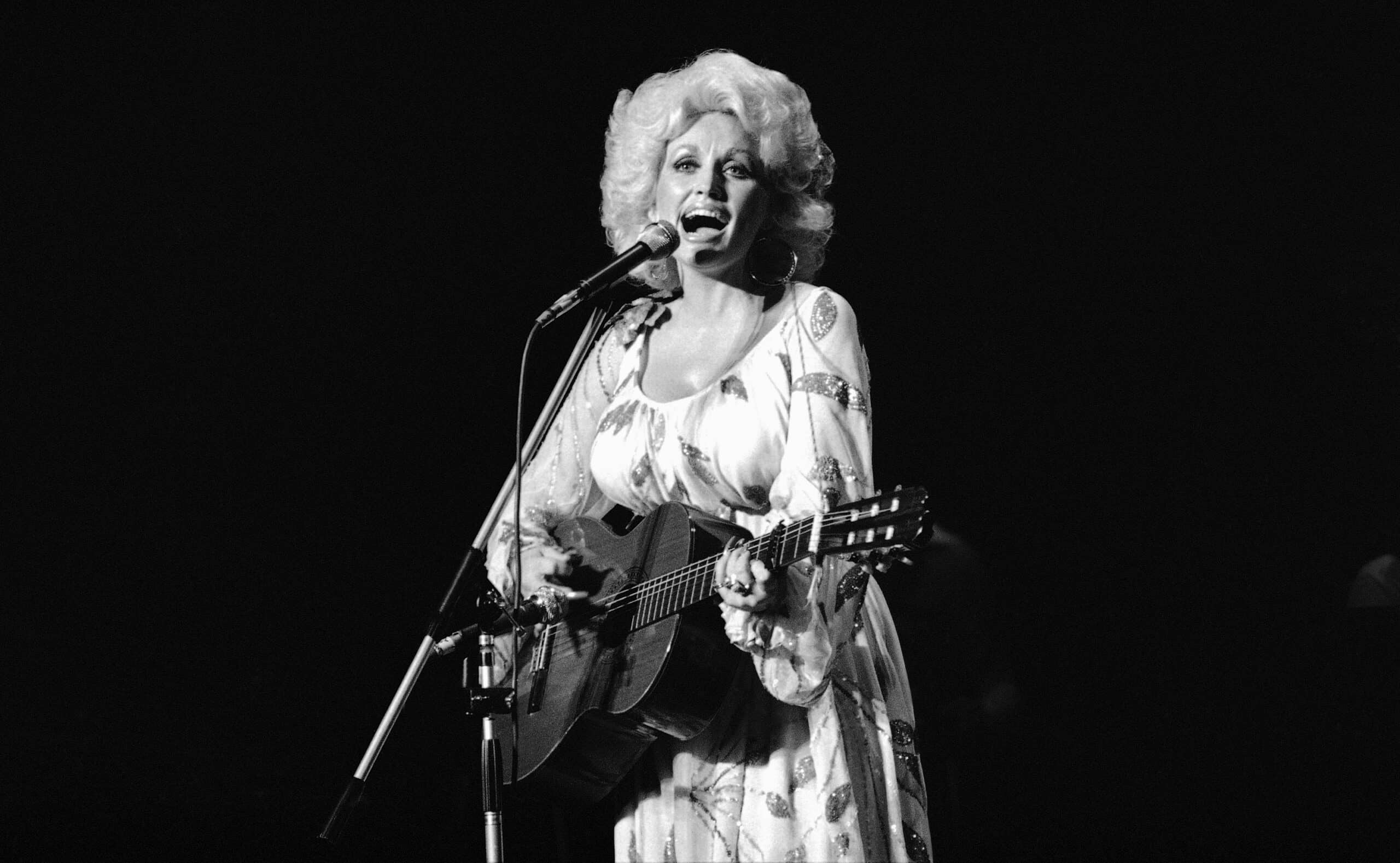
FILE – Dolly Parton performs in concert in Tokyo, July 30, 1979. (AP Photo/Tsugufumi Matsumoto, File)
I remember driving cross-country as a teenager and hearing for the first time the allure of a lilting Tennessee accent. It sounded nothing like my Tagalog-speaking mother. It was another America, another music, another way of telling a story.
Still, I resisted.
In the ’70s and ’80s, when Dolly entered my consciousness, I saw mostly the package.
The sequins. The makeup. The enormous hair. The enormous everything.
Fake?
Or so fake she was real?
That was the trick I didn’t understand.
Dolly understood it completely.
She wasn’t trying to look like the respectable women. Her inspiration was the woman other people might look down on. Dolly turned that judgment into a costume and then turned the costume into power.
As she famously joked, “It costs a lot of money to look this cheap.”
She played a type. Then she owned the type. Then she transcended the type.
That’s show business.
But it’s also identity.
Dolly knew who she was.
Back then, I thought I did, too.
I was Emil For Real, college DJ. Rock. Soul. R&B. Free-form radio. I loved female singers—Bonnie Raitt, Emmylou Harris. Emmylou didn’t even color her hair!
Dolly? Not so much.
Even when I spent time in Texas and started feeling country music, I went for Willie and Waylon. The outlaws.
Not Dolly.
But music has a way of breaking down your prejudices.
Willie and Waylon led me to Freddy Fender, Bob Wills and Western swing. And somewhere along the way, my ears opened.
Maybe the breakthrough came in 1983, when Dolly and Kenny Rogers sang “Islands in the Stream.”
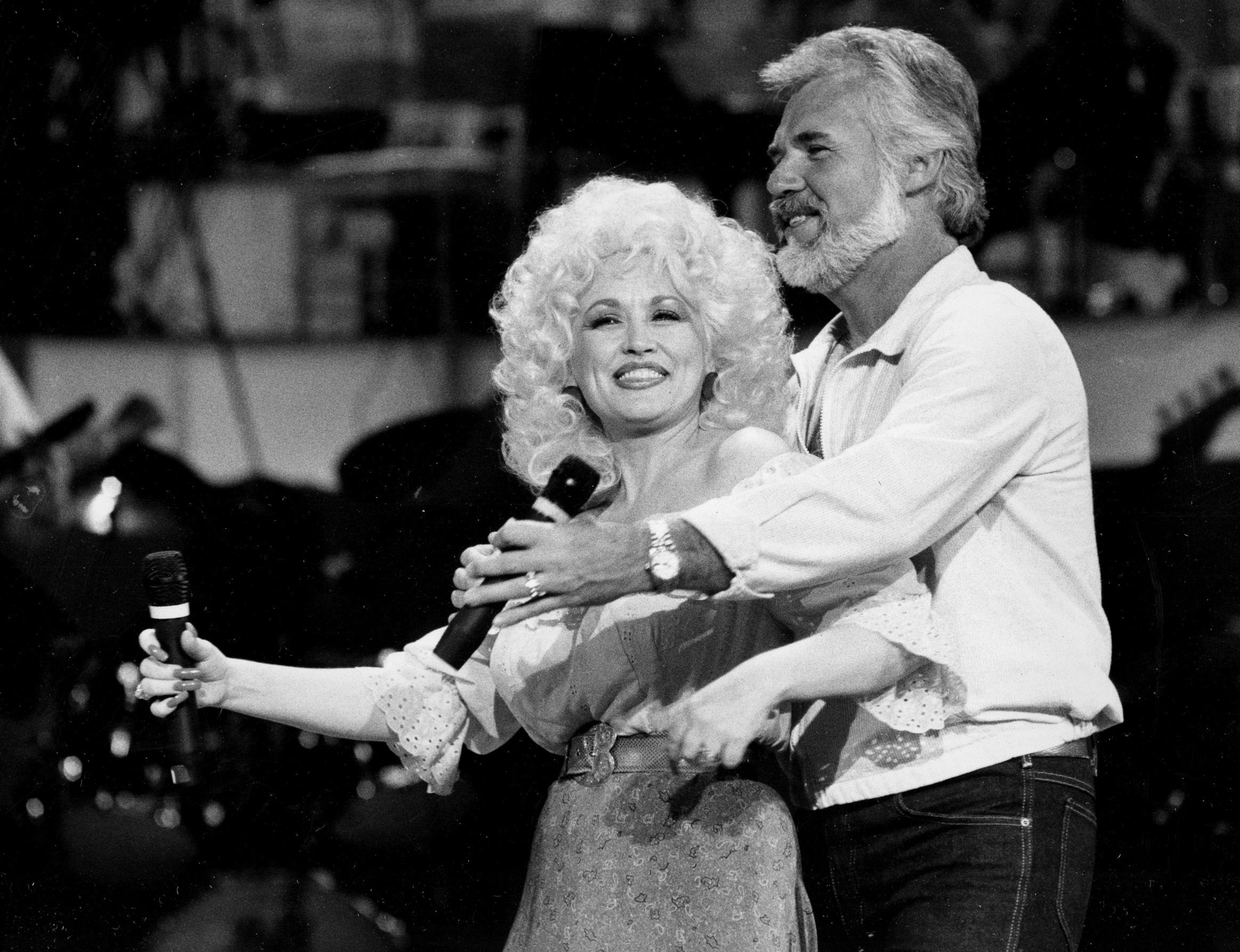
FILE – Dolly Parton, left, and Kenny Rogers rehearse a song for their appearance on the TV show “Live… And in Person” in Los Angeles on Sept. 27, 1983. (AP Photo/Doug Pizac, File)
A Bee Gees song, transformed by Dolly and Kenny into something irresistible.
Maybe the Filipino in me couldn’t resist the title.
Islands?
We’ve got 7,000-plus of them.
I softened.
And Dolly hadn’t changed.
She was still there, waiting for me to catch up.
Later, as an entertainment reporter, I interviewed a ridiculous assortment of famous people.
Bono. Yoko. Johnny Rotten. James Brown. Bob Hope. Pete Seeger. Jane Russell. Cher. Jane Fonda. Glenn Close. Ann Margaret. Jeff Bridges. Helen Hunt. Sarah Jessica Parker. Laura Dern. Sally Field. The Jefferson Airplane. And Starship. Robin Williams.
Just to name the ones I can remember.
I even got about 30 seconds with Imelda Marcos before security pulled me away.
Imelda Marcos – and I couldn’t get 10 minutes with Dolly Parton?
Now that’s one of my journalistic regrets.
Because I never got to ask Dolly about the part I had missed.
The backstory.
She was a girl from the hills of East Tennessee, born into a poor family with twelve children packed into a tiny home without running water.
I’m not saying Dolly was the white Filipino.
But suddenly she didn’t seem so foreign to me.
Big family. Little money.
Faith.
Music.
Dreams bigger than the house you grew up in.
And the determination to make something of yourself without pretending you came from somewhere else.
Sound familiar?
Maybe that’s why many Filipinos got Dolly before I did.
We understand the combination of hardship and showmanship.
We know you can come from poverty and still put on your best clothes. You can carry pain and still sing. You can leave home and spend the rest of your life telling stories about it.
And we certainly understand karaoke as emotional autobiography.
You don’t merely sing the song.
For four minutes, the song is you.
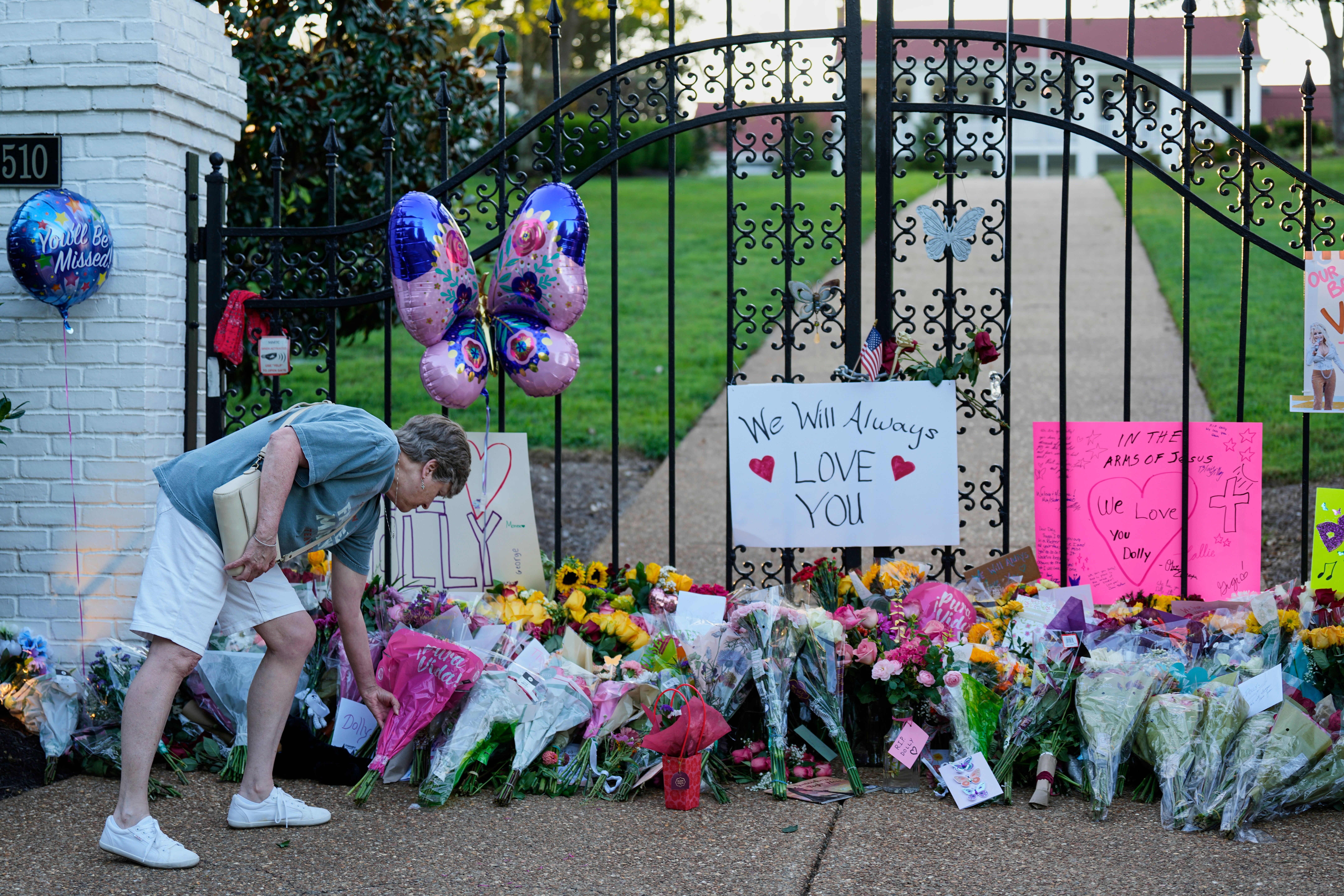
Becky Wangner leaves flowers for a makeshift memorial honoring Dolly Parton outside her home Tuesday, Aug. 25, 2026, in Brentwood, Tenn. (AP Photo/George Walker IV)
That’s what I finally heard in Dolly.
She could take something intensely personal and somehow make millions of people think she was singing directly to them.
That’s more than having a great voice.
That’s storytelling.
That’s communication.
That’s the mysterious thing every writer, singer, actor, comic, journalist and performer spends a lifetime trying to find: the point where your story somehow becomes our story.
Very few people get there.
Dolly did.
And when I heard the music again and watched the remembrances, I admit it:
I shed a tear.
Not for the hair.
Not for the rhinestones.
Not even for the boobs.
For the artist underneath all of it – the woman who had been hiding in plain sight because I had mistaken the costume for the person.
Turns out the 10-year-old Filipina at the karaoke machine knew better.
She picked up the microphone.
She sang Dolly’s song.
And she understood something I didn’t.
Dolly Parton was for real.
In an era of polarization, she was all about bringing people together, not separating us into reds and blues. She wanted us all at the table, regardless of our differences. She found our common humanity. That’s the soul of an artist, not a politician.
In fact, I can’t say I know anything about her politics.
And maybe that’s how you need to be if you want to talk, reach, entertain everyone.
That was Dolly’s way. I think about that now whenever I take the stage.
Like those karaoke girls, I’m thinking about Dolly.
Emil Guillermo is an award-winning journalist, news analyst, comic stage performer and former host of NPR’s “All Things Considered.” He writes for the Inquirer.net’s US Channel. He has written a weekly “Amok” column on Asian American, race and social justice issues for more than 30 years. Find him on YouTube, patreon and substack.
The post OPINION | What Filipino karaoke singers taught me about Dolly Parton appeared first on USNewsRank.